Irish Connections to Budapest: A Fun Guide for Visiting Tourists
Ireland and Hungary go way back—centuries, actually. The two countries have inspired each other, especially when it comes to fighting for independence and freedom.
These days, about 10,000 Hungarians call Ireland home. Meanwhile, there's a smaller but lively Irish community living in Budapest.
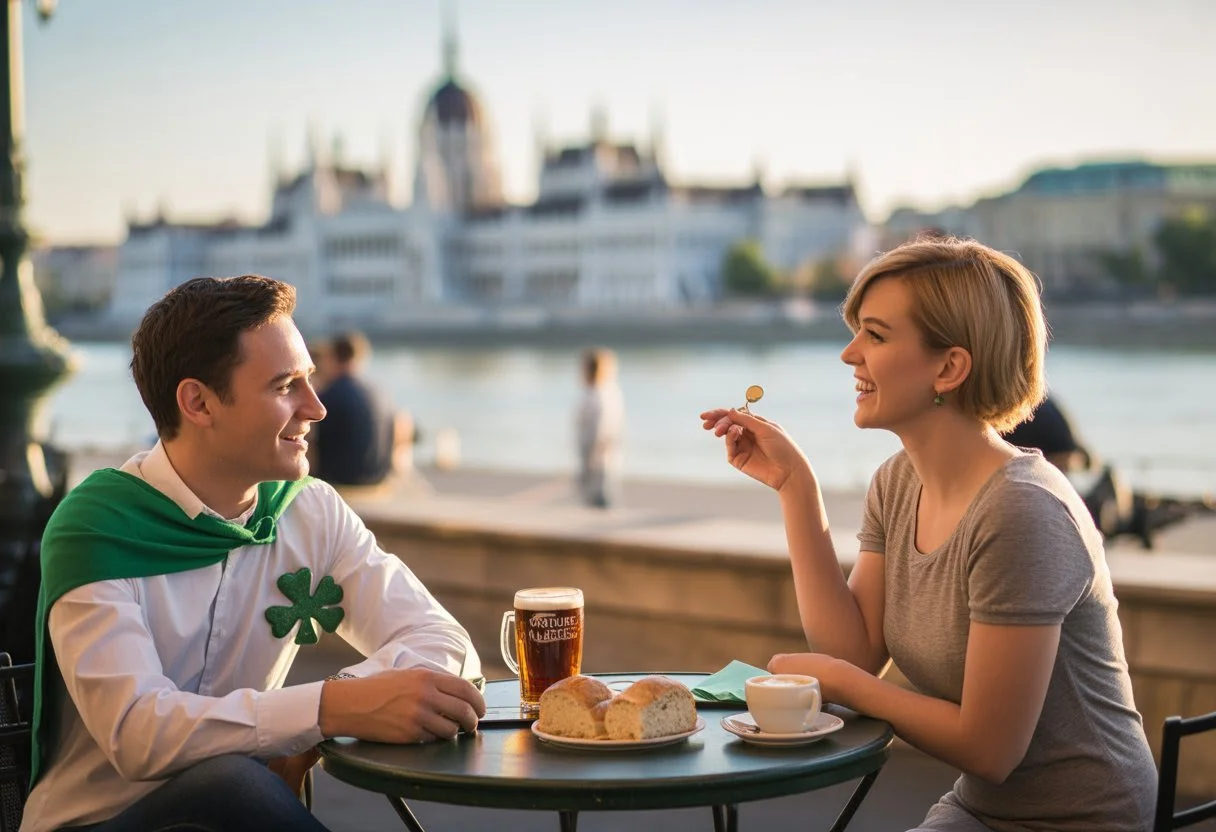
The Irish presence in Budapest includes cultural organisations, business networks, and an embassy that opened in 1995. The Irish-Hungarian Business Circle brings both communities together for social and professional events.
Every March, Budapest turns Szabadság tér into a sea of green for one of Central Europe's biggest St Patrick's Daycelebrations. There's a parade, live music, and plenty of classic Irish food.
Whether you're Irish and thinking about Budapest or just curious, you'll find a warm community here. Business opportunities, cultural celebrations, and that Irish spirit are all alive and well in Hungary's capital.
Key Takeaways
Ireland and Hungary have been connected since the Middle Ages, sharing a passion for freedom.
Budapest's Irish community is active, with support from the Irish-Hungarian Business Circle and big St Patrick's Day events.
Irish expats in Budapest enjoy established networks, business links, and cultural events all year round.
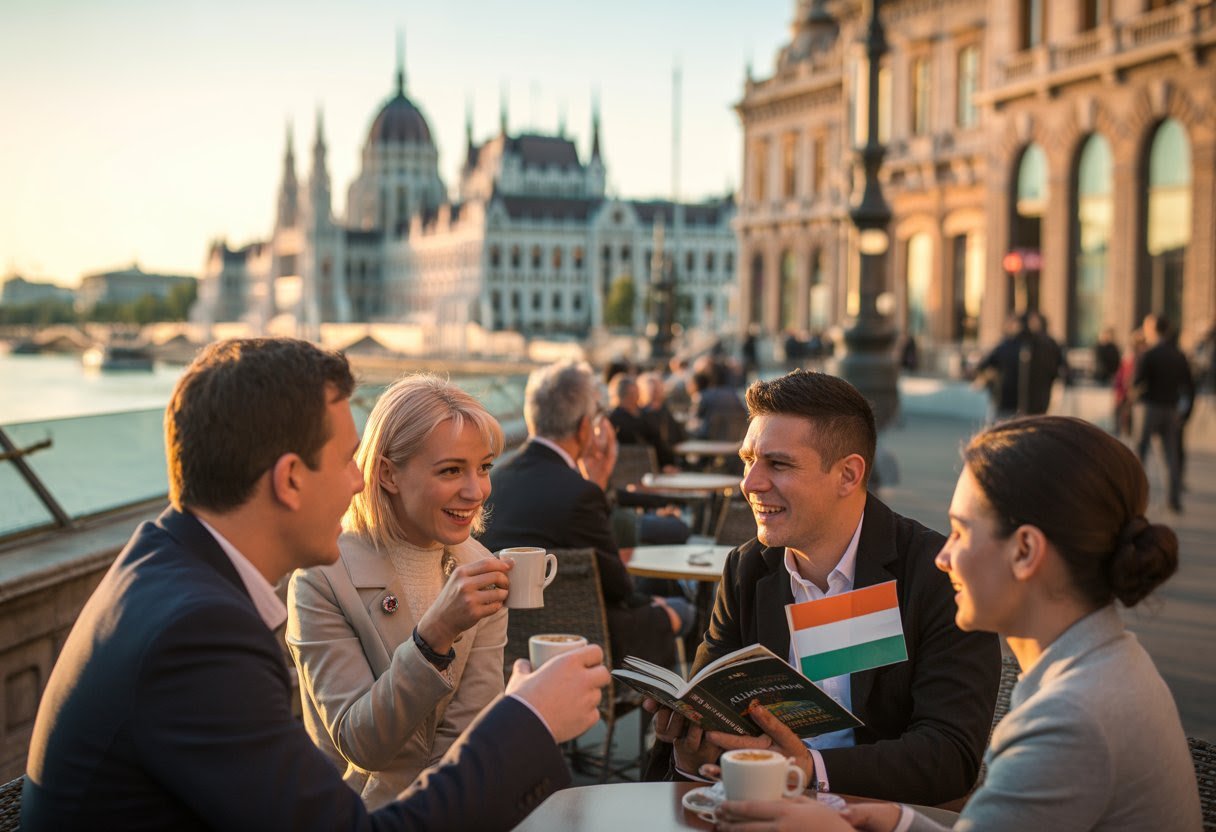
History of Irish-Hungarian Relations
Ireland and Hungary have been in touch for centuries, from medieval times right up to modern EU cooperation. Both countries found inspiration in each other's struggles for independence and now work together as EU members.
Medieval Cultural Exchanges
Back in the Middle Ages, Irish scholars wandered across Europe and often ended up in Hungary. They built connections with Hungarian learning centers and helped lay the groundwork for future relationships.
Most of these early contacts focused on academics and religion. Irish monks and scholars became part of European knowledge networks that included Hungarian territories.
Sure, these medieval exchanges were limited compared to what we have now, but they built a foundation. Later generations would look back on these ties when forging stronger bonds.
Influence of Revolutionaries
In the 19th and early 20th centuries, Irish nationalist leaders found big ideas in Hungarian independence movements. Arthur Griffith, for example, wrote about Hungary's political setup in his 1904 book The Resurrection of Hungary: A Parallel for Ireland.
He dove into the Austro-Hungarian Compromise, wondering if something similar could work between Britain and Ireland. This sparked the idea of "Hungarian-Irish national parallels."
Both nations struggled for freedom under bigger empires, and Irish nationalists kept an eye on Hungary's example as they planned their own path to independence.
Published works and correspondence between leading figures in both countries show just how much they influenced each other. This intellectual back-and-forth shaped Irish nationalist thinking for years.
Establishment of Diplomatic Ties
Ireland and Hungary have never butted heads or had major diplomatic issues. Their relationship has stayed friendly in the modern era.
Ronan Gargan, Ireland's Ambassador to Hungary, points out that people-to-people ties and trading relations have always been good. Both countries work closely within the European Union.
Diplomatic engagement really picked up after both nations gained independence. Hungary opened an Honorary Consulate in Dublin, showing Ireland wanted to boost economic and cultural links with Central Europe.
Now, about 1,000 Irish citizens live in Hungary, most of them in Budapest. On the flip side, 7,000 to 8,000 Hungarians have settled in Ireland.
Milestones in EU Cooperation
Ireland played a special part in Hungary's EU accession in 2004. As EU President at the time, Ireland welcomed Hungary in a ceremony in Dublin—a pretty big moment for Hungary, with Ireland right in the thick of it.
Since Hungary joined the EU, the relationship has only grown stronger. Ireland's been a member since 1973, Hungary since 2004, and they've found more ways to cooperate.
Brexit, oddly enough, brought them even closer as they navigated new trade and policy challenges. Economic ties have skyrocketed, too.
Trade between Ireland and Hungary hit record highs in 2021 and 2022—close to €5 billion, up from just €1 billion in 2020. Ireland's service exports to Hungary jumped by over 600% in the past decade.
Direct flights have boosted tourism both ways, with Hungary seeing 90,000 Irish guest nights in 2017. Not bad for two relatively small countries.
The Irish Community in Budapest
About 1,000 Irish folks live in Hungary, half of them in Budapest. The group includes retirees, professionals, and a lively student crowd that keeps Irish culture buzzing in the city.
Demographics and Backgrounds
Irish people in Budapest come from all kinds of backgrounds. Some moved for work with international companies, others retired here after marrying Hungarian partners.
The community stays small but busy, mostly centered around the Irish Hungarian Business Circle (IHBC), which started in 2005. They organize cultural events, networking, and social gatherings all year long.
The Budapest Gaels GAA club is another hub. Members play Gaelic football and welcome both Irish and Hungarian players.
The IHBC and the Embassy of Ireland team up often, putting together events that keep the two communities close.
Irish Students and Education
About 200 Irish students are currently studying in Budapest. They make up a big chunk of the Irish population and bring plenty of youthful energy.
Most of them stick to Budapest, where universities and Irish cultural activities are easy to find. Hungarian universities with Irish Studies centres help promote Irish culture and language.
These academic programs create what's called an "affinity diaspora"—Hungarians who get attached to Ireland through their studies. The Embassy really values these academic links, since they deepen understanding between the countries.
Integration and Social Life
Irish residents fit into Budapest's social scene while keeping their own traditions alive. You'll spot Irish pubs all over the city, serving as hangouts for expats and locals who love Irish culture.
The café scene and artsy vibe in Budapest attract plenty of Irish folks who appreciate what the city has to offer. The community keeps things lively with regular gatherings and activities.
InterNations Ambassadors host events that range from dinners to trips around Hungary. Some Irish residents have even started businesses that blend Irish and Hungarian traditions—arán bakery, for instance, mixes both baking styles.
It's an open, friendly group that celebrates Hungarian culture right alongside their Irish roots.
Irish Cultural Events and Traditions
Budapest's calendar is packed with Irish cultural events, and the St. Patrick's Day bash draws thousands every year. The Irish community keeps traditions alive with festivals, music sessions, and sports that bring everyone together.
St. Patrick's Day Parade and Celebrations
The main St. Patrick's Day fun happens at Szabadság tér every March, usually on the Sunday closest to the 17th. In 2025, festivities ran from noon to 6 pm, with live Irish music and dance lighting up the square.
The parade kicks off at 2 pm, winding through District V and passing landmarks like the Parliament building and St Stephen's Basilica. St. Patrick himself leads the way, followed by community groups and cultural organizations.
Besides the parade, you'll find Irish food and drinks, face painting, and activities for kids. Money raised goes to charity, which feels right. The event celebrates Irish-Hungarian heritage, and recent years have even honored folks like Henry Spelter—a Hungarian refugee who became a famous confectioner at Dublin's Bewley's café after 1956.
Cultural Programmes and Festivals
Irish pubs all over Budapest host traditional music sessions, with fiddles, tin whistles, and bodhrán drums setting the mood. You don't need to fly to Ireland for that authentic vibe.
The Irish-Hungarian Business Circle throws a charity gala every March at the Marriott hotel. It's a mix of Irish cultural performances and fundraising for Hungarian charities, including groups that help victims of domestic abuse and vulnerable youth.
Universities and Irish studies centers in Budapest also put on cultural programs throughout the year. The Irish Embassy shares info about lectures, film screenings, and exhibitions that dig into Irish history, literature, and society.
Irish Sports: The Budapest Gaels
Budapest Gaels GAA keeps Gaelic football and hurling alive in Hungary. You can catch demonstrations of both sports at the St. Patrick's Day festival on Szabadság tér.
The club welcomes Irish expats and locals who want to try these uniquely Irish games. Gaelic football is a wild mix of football and rugby, while hurling—played with wooden sticks and a small ball—is one of the oldest field games around.
Business and Professional Links
Ireland and Hungary have built strong business ties through formal networks, Irish investments, and trade initiatives. Enterprise Ireland works from Budapest to support commercial relationships, and several big Irish firms have set up shop across Hungary.
Irish-Hungarian Business Circle (IHBC)
The Irish-Hungarian Business Circle started in 2005 as a non-profit, independent group. It connects Irish and Hungarian professionals for networking and cultural events.
If you're an Irish business eyeing Hungary or a Hungarian company curious about Ireland, the IHBC is your go-to. They focus on business, social, cultural, and charity projects.
Members include big names like Kingspan, PwC, Enterprise Ireland, and Avis Budget Group. The IHBC also partners with the Irish Embassy to sponsor Budapest's St Patrick's Day Festival and other community events.
Irish Companies Operating in Hungary
Several major Irish companies have a real presence in Budapest and nearby areas. Five big Irish firms each employ 200 to 300 people in their Hungarian branches.
Kingspan set up its Hungarian subsidiary in 2004 and now leads in sustainable building solutions. McHale Engineeringis active in agricultural equipment, while Danucem (part of the CRH Group) runs construction product plants and distribution centers across Hungary, Austria, and Slovakia.
The Avis Budget Group operates its Business Support Centre in Budapest's Green House building. These companies take advantage of Hungary's central location and skilled workforce.
Trade and Economic Partnerships
Enterprise Ireland has offices at Bank Center in Budapest, working closely with the Irish Embassy to boost trade between the countries. The agency backs events to promote partnerships and helps Irish businesses break into the Hungarian and Central European markets.
The Irish Ambassador is always on the lookout for new trading opportunities for Irish companies in Hungary. This includes linking Irish and Hungarian firms and exploring regional opportunities. If you're looking to enter or expand in the market, Enterprise Ireland's Budapest office can help you out.
Living as an Irish Expat in Budapest
About 500 Irish citizens call Budapest home. They're part of a broader community of roughly 1,000 Irish people across Hungary.
Life as an Irish expat here means juggling familiar connections with new cultural experiences. Some days, it feels like Ireland; other days, not so much.
Finding Community and Support
The Irish community in Budapest is small but lively. The Irish Hungarian Business Circle organizes cultural, social, and business events throughout the year.
This not-for-profit group has been around since 2005. They work closely with the Irish Embassy to keep Irish expats connected with locals.
If you feel like playing sports, the Budapest Gaels Gaelic football club is open to both Irish and Hungarian players. InterNations Budapest also hosts regular meetups and activities, making it easier for expats to settle in.
The Irish Embassy rolls out an active events calendar. Besides massive St Patrick's Day parties, you'll spot gatherings for St Brigid's Day, Bloomsday in June, and Halloween events that lean into Irish storytelling.
There's even a monthly Embassy book club focused on new Irish fiction. Sometimes you wonder who picks the books, but that's part of the charm.
Language, Food, and Daily Life
Most Irish expats in Budapest work for international companies. Around 200 study at local universities.
Daily life doesn't really demand Hungarian for basics, though picking up a few phrases definitely helps. It's funny how a simple "köszönöm" can make shopping easier.
Traces of home pop up in odd places. The bakery "arán" (Irish for bread) was started by Hungarians who lived in Ireland for a decade, blending Irish and Hungarian baking traditions.
Budapest's café culture and food scene offer plenty of variety. Still, if you're craving proper Irish ingredients, you might have to travel a bit.
The city's architecture, arts, and music give Budapest a vibrant atmosphere. Many Irish expats find it culturally rich and surprisingly engaging.
Notable People and Influencers
The Irish community in Budapest relies on dedicated leadership to keep cultural ties strong and promote Irish heritage. Ambassador Ronan Gargan and a handful of community volunteers work to maintain connections between Ireland and Hungary through events and grassroots organization.
Ambassador Ronan Gargan
Ronan Gargan landed in Budapest in December 2019 to serve as Ireland's Ambassador to Hungary. He moved from Brussels with his family and quickly noticed Budapest's deep cultural roots and complex history.
Ambassador Gargan looks after a community of about 1,000 Irish citizens in Hungary, with half living in Budapest. He promotes Irish culture through events—St Patrick's Day, St Brigid's Day on 1 February, Bloomsday on 16 June, and Halloween on 31 October all make the calendar.
He teams up with Enterprise Ireland and local Irish groups to strengthen ties between Ireland and Hungary. The ambassador especially appreciates Hungary's "reverse diaspora"—Hungarians who lived in Ireland and came back with a lasting love for Irish culture.
Community Leaders and Volunteers
The Irish Hungarian Business Circle stands out as the main organizing force for the Irish community in Budapest.
They pull together cultural, social, and business events all year, like the St Patrick's Day Parade. Honestly, it's hard to imagine the local Irish scene without them.
The Budapest Gaels GAA club is another lively hub. They play Gaelic football and genuinely welcome both Irish citizens and Hungarians.
Volunteers throw themselves into promoting Irish culture. They keep people-to-people links between the two nations alive and kicking.
Up to 200 Irish students study in Budapest, mostly sticking to the capital.
The community also includes retirees with Hungarian spouses. Plus, there are professionals working for international companies here.
Together, these groups create a small but vibrant Irish presence in the city. It's not huge, but it's definitely felt.
