The History of Guinness: Discover Ireland’s Iconic Stout in Budapest
Guinness stands as one of the world's most recognisable beers. Its story stretches back more than 260 years.
The history of Guinness began on 31 December 1759, when Arthur Guinness signed a 9,000-year lease on a small brewery at St James's Gate in Dublin for just £45 per year.
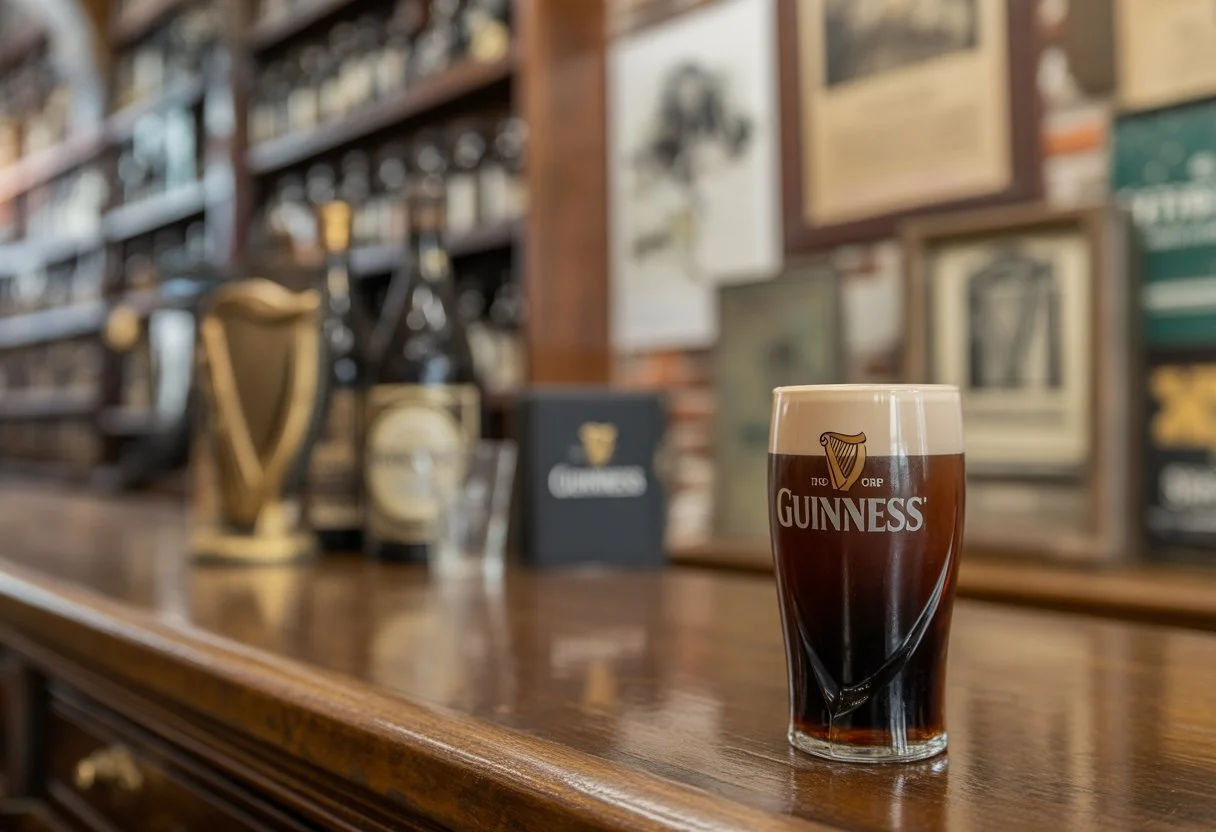
What started as a modest operation brewing ales would eventually transform into the largest brewery in the world by 1880. That journey created the iconic stout you know today.
Arthur Guinness made a pivotal choice in 1799. He stopped brewing ales and focused entirely on porter, a dark beer that would later evolve into the stout Guinness became famous for.
This single-minded commitment let the brewery perfect its craft and build a reputation that carried the brand across oceans. The journey from a local Dublin brewery to a global brand involved bold decisions and innovations that shaped the beer industry.
Today, Guinness is brewed in nearly 50 countries and available in over 120. Still, its roots remain firmly planted in Dublin.
The story behind this iconic stout includes pioneering employee welfare programmes, trademark innovations, and brewing techniques that changed how the world enjoys beer.
Key Takeaways
Arthur Guinness leased St James's Gate brewery in Dublin in 1759, establishing what would become the world's largest brewery by 1880
The brewery shifted from producing ales to focusing exclusively on porter in 1799, which later evolved into the distinctive stout Guinness is known for today
Guinness expanded globally from its first exports to England in 1796 and introduced major innovations including the trademarked harp symbol, nitrogenated draught beer, and welfare programmes for employees
The Origins of Guinness
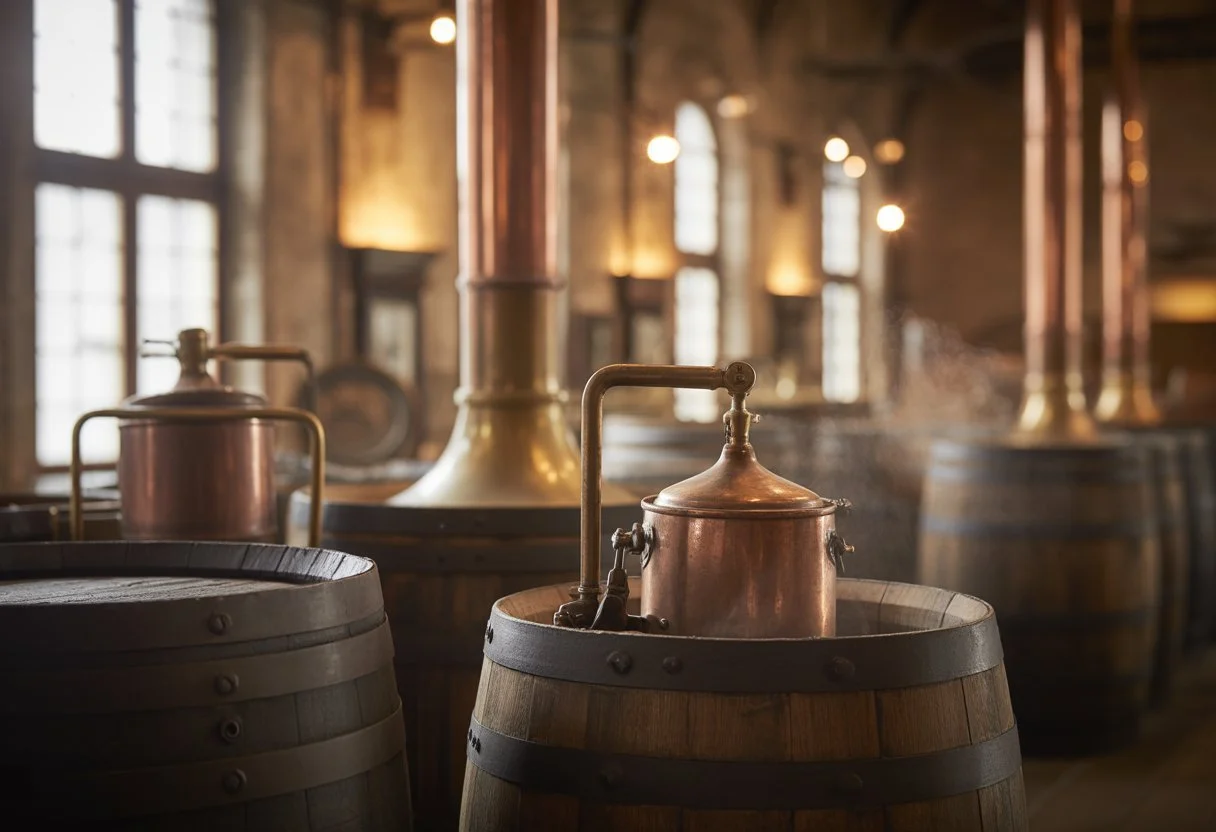
Arthur Guinness transformed a small Dublin brewery into one of the world's most recognised brands. The story began in 1759 when he signed an extraordinary 9,000-year lease for St. James's Gate Brewery.
This set the foundation for generations of brewing excellence. Arthur Guinness was born around 24 September 1725 in Clonoughlis, Celbridge, County Kildare.
Arthur Guinness and His Legacy
His father worked for Arthur Price, a bishop of the Church of Ireland who managed the Celbridge estate. Arthur probably developed his passion for brewing there, since his father was in charge of brewing on the estate.
Arthur wasn’t just a brewer. He became an active member of Dublin's public life, serving as Warden of the Dublin Corporation of Brewers in 1763 and Master of the Corporation in 1767.
By the 1770s, he’d earned the position of brewer to Dublin Castle. His commitment to giving back to the community became a hallmark of the Guinness family.
Arthur donated 250 guineas to the Chapel Schools attached to St Patrick's Cathedral in Dublin. He also served as Governor of the Meath Hospital and Secretary to the Friendly Brothers of St Patrick.
This tradition of philanthropy would continue through seven generations of Guinness Master Brewers. It’s a legacy that shapes the brand even now.
The 9,000-Year Lease at St. James's Gate
On 31 December 1759, Arthur Guinness signed a lease that became legendary in brewing history. He agreed to pay £45 annually for St. James's Gate Brewery, a four-acre site in the heart of Dublin.
The lease was set to run for 9,000 years, which is just wild. The terms granted him use of a limited water supply.
When Dublin Corporation tried to cut off this supply due to overuse, Arthur famously defended his rights with fierce determination. Historical records say he "violently rushed upon them, wrenching a pickaxe from one and declaring with very much improper language, that they should not proceed".
This wasn’t just about paperwork. It was about holding onto that vision and fighting for what he’d built.
Early Brewing at St. James's Gate Brewery
When Arthur first took control of St. James's Gate Brewery, the operation produced a variety of ales and beers. The brewery was modest in size, but Arthur had ambitious plans for expansion and quality improvement.
By 1799, a pivotal decision shaped the future of Guinness. The brewery chose to concentrate exclusively on porter, a dark beer with a rich head that was gaining popularity.
This focus allowed Arthur and his team to perfect their craft and develop the distinctive taste that would become world-famous. The brewery's growth wasn’t just about making beer.
Arthur understood the importance of creating jobs and supporting his workers. He pioneered employee welfare in Ireland, paying wages roughly 10% higher than the average industrial wage in Dublin at the time.
Building a Brewing Dynasty
The Guinness family transformed a single Dublin brewery into one of the world's most recognizable brands. They did this through strategic leadership and careful succession planning.
Each generation brought fresh innovation while holding onto the core values that built the business. Arthur Guinness founded the brewery in 1759, but his descendants turned it into an empire.
The Guinness Family Through Generations
His son, also named Arthur, took over the business and expanded operations significantly. By the time Benjamin Lee Guinness inherited control in the 1850s, the brewery was already Ireland's largest.
Benjamin Lee Guinness became the most successful businessman in Ireland. He modernized production methods and expanded the brewery's reach across the British Empire.
His wealth grew so vast that when he died in 1868, his estate was valued at £1,100,000—the largest fortune ever proved in Ireland at that time. The family nickname for Benjamin was "The Governor."
His children grew up surrounded by luxury but were taught Protestant middle-class values of sobriety and Christian duty. They attended daily prayers, family breakfasts, and church every Sunday without exception.
Innovators and Philanthropists
Benjamin Lee Guinness split the brewery between his two sons in his will. Arthur Edward, the eldest, inherited the baronetcy and Ashford Castle.
Edward Cecil Guinness received the family home at 80 St Stephen's Green and a £10,000 investment in property near the brewery. Edward Cecil showed the strongest connection to the business.
He entered the brewery at just 15 years old and built relationships with senior staff. His father recognized this dedication and structured the will to keep the brewery capitalized—if one brother went bankrupt or wanted out, his share automatically passed to the other.
The Guinness family invested heavily in Dublin's infrastructure and social welfare. Benjamin Lee restored St Patrick's Cathedral at his own expense.
Later generations established the Iveagh Trusts to provide social housing and community amenities in central Dublin. These moves made a real difference in the city.
The Earl of Iveagh and the House of Guinness
Edward Cecil Guinness eventually became the sole owner of the brewery and transformed it into the largest in the world. His success earned him the title of 1st Earl of Iveagh.
At one point, he was the richest man in Ireland. The Earl of Iveagh continued the family tradition of philanthropy whilst expanding the business internationally.
The Guinness and Iveagh Trusts grew to become major charitable organizations. These trusts focused on improving living conditions for Dublin's working class.
The title passed through the family, with Arthur Edward Guinness eventually becoming the 4th Earl of Iveagh. Born in Dublin and raised at Farmleigh, he maintained active involvement in promoting Guinness beer and supporting social housing initiatives.
The family estate at Farmleigh became a symbol of the dynasty's enduring influence in Ireland. There’s something special about that kind of legacy.
Evolution of the Guinness Brand
The Guinness brand developed distinctive visual elements that set it apart in the global market. The harp symbol became central to brand identity in 1862.
Marketing innovations helped transform a Dublin brewery into an international icon. The Irish harp appeared on Guinness bottle labels in 1862, making it one of the earliest examples of modern brand symbolism.
Birth of the Guinness Harp and Trademark
The design drew inspiration from the 15th-century Brian Boru harp, which you can still view at Trinity College Dublin. By the 1860s, Guinness stout was available worldwide, and the Guinness family wanted a symbol that would firmly identify their product as Irish.
The company registered the harp as a trademark in 1876. This move proved so successful that when the Irish Free State formed in 1922, the Irish government had to position their official harp facing the opposite direction due to existing trademark registration.
The harp design evolved over time. Early Guinness memorabilia shows varying numbers of strings on the harp as the design became more minimal.
Designer Gerry Barney played a key role in modernising the symbol, redesigning it in 1968 and again in 2005. Beyond the harp, Guinness developed a comprehensive visual identity that reinforced its heritage.
Guinness Signature and Iconography
The brand's iconography emphasised its Irish roots whilst appealing to international markets. Your recognition of Guinness today stems from decades of consistent branding that linked quality, tradition, and innovation.
The distinctive black liquid became synonymous with the brand itself. This visual signature proved particularly powerful in African markets, where Guinness established its first brewery outside Ireland and the United Kingdom in 1962.
Marketing and Guinness Advertisement
Guinness pioneered innovative approaches to quality assurance that doubled as marketing. In the 1890s, the company sent representatives around the world by steamship to verify that Guinness was being shipped, stored, and served properly.
These quality inspectors travelled to Australia, South Africa, China, and Brazil, documenting conditions in detailed reports. Early advertising recognised diverse markets.
In 1900, representatives recommended creating advertisements in Chinese and Malay languages using native characters for Asian markets. By 1904, Australian reports noted that merchants understood the importance of cool storage.
American establishments in 1911 served draught stout from ice-boxes. The company's marketing evolved from these practical quality checks into sophisticated brand campaigns.
By the mid-1800s, Guinness had mastered both brewing volumes and brand marketing. That’s how it went from a local favourite to a global presence.
Stout Innovation and Brewing Milestones
Guinness transformed from a small Dublin ale brewery into a global stout powerhouse through deliberate innovation in brewing techniques and technology. The journey from Arthur Guinness's first porter to modern nitrogenated beer involved key breakthroughs in recipe development, serving methods, and packaging.
From Ale to Porter and Stout
Arthur Guinness started his brewing career producing ale at St James's Gate in 1759. By the 1770s, he began experimenting with porter, a dark beer style that was gaining popularity in England.
The beer's robust flavour and longer shelf life made it ideal for the Dublin market. In 1799, Arthur made a bold decision to stop brewing ale entirely and focus solely on porter.
This commitment to a single beer style let him perfect his craft. The darker, stronger variant known as stout porter emerged from this period, eventually becoming simply "stout."
West India Porter arrived in 1801, specifically designed for long sea voyages to foreign markets. Arthur increased the hop content and alcohol strength to help the beer survive harsh conditions during transport.
This brew evolved into Guinness Foreign Extra Stout by 1849. It’s still popular in Asia, Africa, and the Caribbean.
The Creation of Guinness Draught
The mid-twentieth century brought new challenges as cold draught beer gained popularity over traditional bottled options. Lagers and lighter beers started dominating the draught market, putting pressure on Guinness to adapt.
Michael Ash, a mathematician who became a brewer, came up with the solution that would define modern Guinness. His work in the late 1950s focused on creating a smooth, creamy draught stout that kept the beer's distinctive character.
Ash's innovation centred on using a different gas system than the standard carbon dioxide used in most beers. The result was Guinness Draught, a beer that offered a completely different drinking experience.
It poured slower and developed a distinctive creamy head that became a hallmark of the brand. And honestly, isn’t that what everyone remembers about a perfect pint of Guinness?
Nitrogenation and Creamy Head
Michael Ash had a wild idea: use nitrogen instead of carbon dioxide to pour the beer. Nitrogen forms much smaller bubbles, which gives Guinness that smooth, velvety texture everyone talks about.
When Guinness launched the world’s first nitrogenated beer in 1959, it was an instant hit. The creamy head became the beer’s most famous feature.
During the pour, nitrogen bubbles surge up and down in the glass. That’s what creates the mesmerizing cascade and the thick, lasting foam on top.
Honestly, that dense foam just looks good—and it feels even better to drink. Nitrogenated Guinness needs special taps and a very particular pouring technique, but it’s worth the fuss.
Advances in Packaging: Widget Cans and Nitrosurge
Trying to bring the draught experience home? That was a headache for a long time. How do you get that nitrogen effect in a can?
Guinness cracked it in 1988 with the widget—a small plastic gadget inside every can. When you open the can, the widget pops nitrogen into the beer, recreating that creamy draught pour.
The widget even snagged the Queen's Award for Technological Achievement in 1991. It turned canned Guinness from a compromise into a real contender for a proper pint at home.
MicroDraught – a compact system for home use
NitroSurge – uses ultrasonic waves to activate nitrogen
Guinness 0.0 – alcohol-free, but with the same nitrogen magic
Guinness Nitrosurge is the latest gadget in the lineup. It uses an ultrasonic transmitter to agitate the beer and release nitrogen, no gas lines or widgets needed.
You just set a special can on the device and it pours you a pub-quality pint, right in your kitchen. It’s a bit of a show, honestly.
Global Expansion and Guinness Variants
Guinness started as a Dublin brewery, but it didn’t stay local for long. Strategic exports kicked off in 1796, and the company kept tweaking its beers for new markets and climates.
They set up breweries across continents to keep up with demand. That’s how Guinness became a global name, not just an Irish one.
Exporting Guinness Worldwide
The first Guinness export left Dublin in 1796, heading for England. By 1822, the brewery shipped its first international order to Barbados in the Caribbean.
This move kicked off Guinness’s presence in tropical markets. The Dublin site grew fast—by 1880, St James's Gate was the biggest brewery on earth.
Guinness sales spread across Asia, Africa, and the Caribbean. Today, Guinness is brewed in nearly 50 countries and sold in over 150.
Foreign Extra Stout is still the big favorite in Asia, Africa, and the Caribbean. It’s got a serious following.
Key Guinness Variants and Innovations
Back in 1801, Guinness brewed West India Porter with extra alcohol and hops to survive long ocean journeys. By 1849, it had evolved into Guinness Foreign Extra Stout.
The company’s always been up for experimenting with new variants:
Guinness Foreign Extra Stout – Strongest, big hit in tropical places
Guinness Special Export Stout – Premium, higher alcohol
Guinness Extra Smooth – Creamier, for certain markets
Malta Guinness – Non-alcoholic, huge in Africa
Guinness 0.0 – Zero alcohol, recent launch
Hop House 13 – Lager, still under the Guinness name
Guinness Blonde – American-style lager, now discontinued
Guinness Red – Ruby red ale, limited run
They also make Guinness Yeast Extract, which people use as a food spread. Not everyone’s cup of tea, but it’s out there.
Breweries Beyond Ireland
Guinness set up breweries outside Dublin to keep up with international demand and dodge trade barriers. They built facilities in key markets during the mid-20th century’s wave of decolonisation and economic change.
Regional breweries now operate all over the world. They brew local versions but stick to the standards set by Dublin.
Foreign Extra Stout really suits tropical climates, especially where refrigeration is tricky. Guinness built plants in Africa, Southeast Asia, and other former British colonies to keep things local and fresh.
This approach let them adapt to local tastes and keep costs under control. Smart move, honestly.
Guinness in Irish and Global Culture
Guinness has shaped Irish identity and become a global icon. The brewery’s influence stretches from Dublin’s streets to the Guinness Storehouse, where millions get a taste of its story up close.
Guinness and Irish National Identity
Guinness stands for Irish culture worldwide, even though British multinational Diageo has owned it since 1997. The harp logo really seals the connection—Guinness used it first in the 1860s to mark their stout as Irish.
When Ireland became independent and picked the harp as its symbol, they had to compromise: the government took the right-facing harp, Guinness kept the left-facing one.
The stout is basically glued to Irish pubs and social life. You’ll see it poured in tiny Dublin bars and Irish pubs everywhere from Berlin to Boston.
Even though Nigeria now drinks more Guinness than any country outside the UK, the beer still feels unmistakably Irish. The St. James’s Gate brewery in Dublin is still the spiritual home, no matter where else it’s brewed.
Philanthropy and Employee Welfare
The Guinness family really cared about their workers, way before it was trendy. Arthur Guinness and his descendants invested in housing, healthcare, and education for employees.
They built homes for workers and supported the Dublin community, ignoring religious divisions—a bold move at the time. The family also funded hospitals, churches, and community projects across Dublin.
They genuinely looked out for people who worked for them and lived nearby. These welfare efforts set the bar for corporate responsibility, decades ahead of everyone else.
Celebrating Guinness: Arthur's Day and Guinness Storehouse
The Guinness Storehouse at St. James’s Gate is a tourist magnet, pulling in over a million visitors a year. Opened in 2000, the seven-story building covers brewing, advertising, tasting, and more.
The Gravity Bar at the top gives you sweeping views of Dublin with your pint. Arthur’s Day started in 2009 to celebrate Arthur Guinness’s 9,000-year lease, with people around the world raising a toast at 17:59 on September 23rd.
The event ended in 2013 over concerns about promoting excessive drinking, but it showed just how far Guinness’s cultural reach goes. It’s more than just a beer—it’s a global ritual.
Modern Guinness: Innovation and Legacy
Guinness keeps changing, even under Diageo’s corporate umbrella. They’re always mixing tradition with new tech and digital marketing, trying to stay iconic while keeping up with what people want.
Guinness in the Age of Diageo
Diageo took over Guinness through a series of mergers in the drinks industry. Now, they manage Guinness as part of a massive portfolio, making sure it sticks to Arthur Guinness’s standards.
Since joining Diageo, Guinness has expanded its distribution networks a ton. You can find it in over 150 countries now, which is wild.
Diageo invests heavily in the Guinness Storehouse, keeping it fresh and drawing in millions of visitors. They’ve also set up cultural hubs in cities like London, keeping the brand tied to both its Irish roots and modern city life.
Recent Innovations and Non-Alcoholic Offerings
Guinness 0.0 is one of their biggest recent moves. It’s non-alcoholic, but somehow still has that dark ruby color and smooth taste you expect from Guinness.
The brand ran a big campaign for Guinness 0.0, including the ‘Singing Pints’ TV ad in 2023. That was part of Ireland’s largest responsible drinking push, encouraging people to enjoy Guinness and still make smart choices.
NITROSURGE brings the classic two-part pour to your kitchen counter. Guinness innovators and taste experts developed this tech to create the surge and settle effect at home, no draught gear needed.
The widget in cans still does its job, too—delivering the nitrogen-infused experience Michael Ash dreamed up back in 1959.
Social Media and Cultural Presence
Guinness keeps up a lively digital presence across platforms like YouTube. The brand shares its heritage and tries to connect with younger folks, which honestly feels pretty smart.
You'll spot everything from brewing tutorials to cultural celebrations. Somehow, Guinness manages to keep things classy even when it's just a quick video or a meme.
The company uses social media to celebrate St. Patrick's Day all over the world. Suddenly, what started as an Irish tradition turns into a global marketing moment.
Guinness sales usually jump during this time. It’s a clear sign the brand matters to people well beyond Ireland.
Digital campaigns highlight Guinness's brewing innovation and commitment to quality. The brand often shows behind-the-scenes moments from its breweries, letting you peek at the craft and, maybe without realizing it, drawing in new fans.
